
Our recent trip to Maison&Objet in Paris was an opportunity to do exactly that. It wasn’t about coming back with a list of products to copy. It was about looking for the shifts happening around us: how people are using colour, how spaces are becoming more expressive, what materials are emerging and, importantly, how people increasingly want environments to say something about them.
Here are six themes that stood out to us:
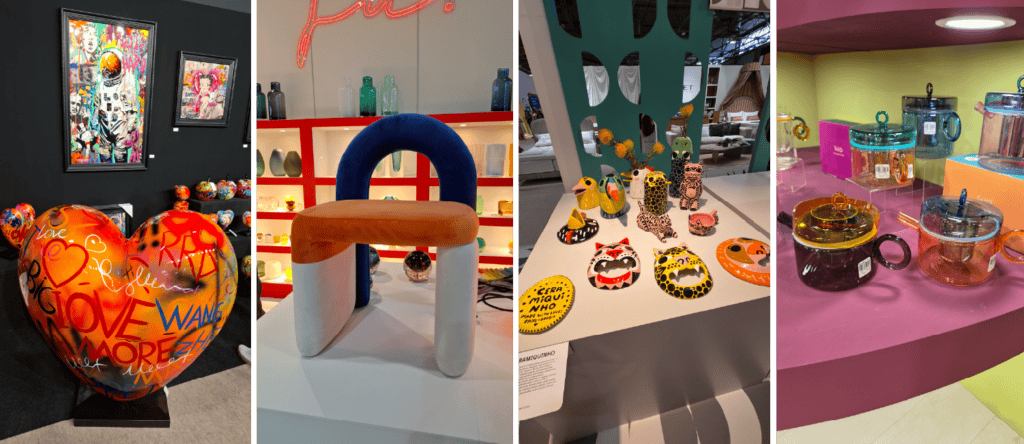
1. Playful Maximalism
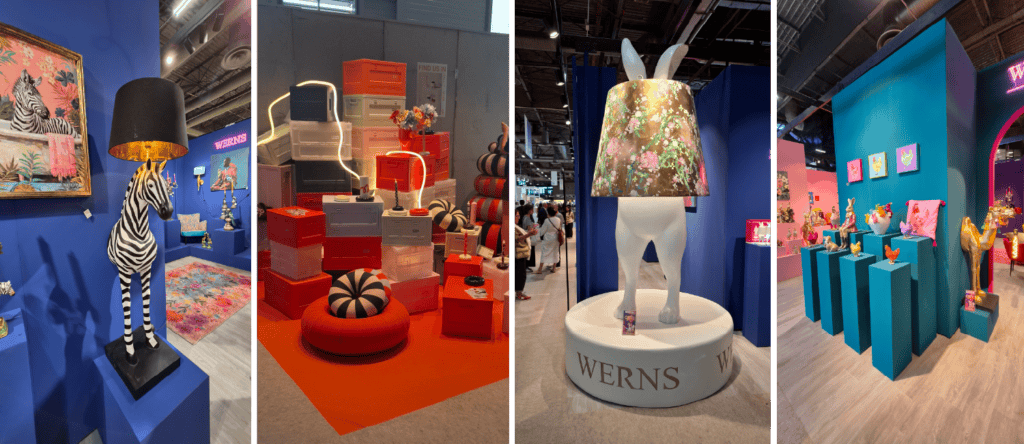
After years of pared-back interiors, there was a noticeable move towards spaces that felt louder, more colourful and less concerned with everything matching. Strong colour, unusual shapes, patterns, pop-art references and even street-art influences were appearing across furniture, objects and displays. There was a sense that spaces could be a little less controlled and a little more fun.
For retailers, that doesn’t mean filling a shop with colour for the sake of it. It is more about creating moments of energy: a feature display, unexpected graphic, material or installation that catches attention and gives the customer something to remember.
2. Modern Nostalgia
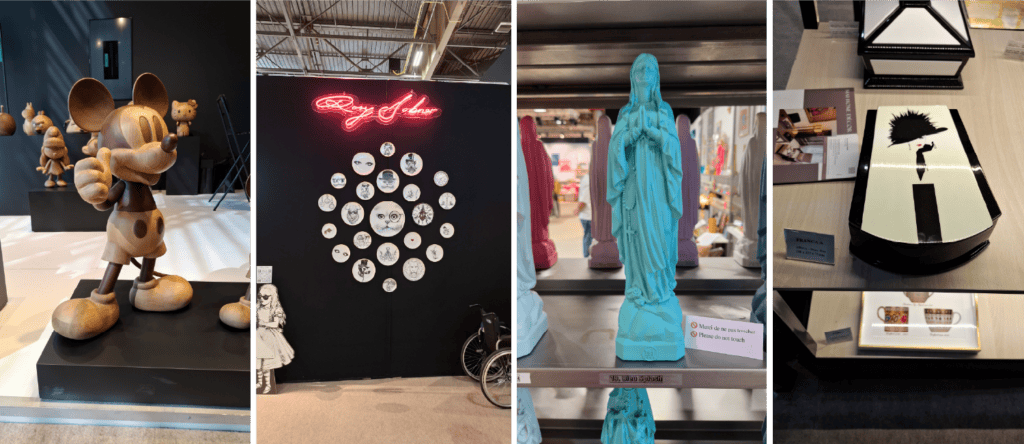
Nostalgia was everywhere, but it rarely felt old-fashioned. We saw references to vinyl, record players, vintage materials, traditional floral patterns and design cues from previous decades, reinterpreted through contemporary materials and high-quality craftsmanship.
There is something powerful in that for retail. Stores are often deeply connected to place, community and history. Rather than wiping that away in the pursuit of something completely new, there is an opportunity to take familiar ideas, local stories or heritage and present them in a fresh way. The past can become part of the experience rather than something we design over.
3. Personal Expression
Perhaps the biggest theme was individuality. Objects were no longer simply decorative. They were telling you something about the person or brand that had selected them. A record collection, piece of artwork or unusual object becomes a conversation starter. It creates character and gives a space its own identity.
That thinking translates directly into retail. A store should not feel like it could belong to anybody. Particularly for independent and community-based retailers, there should be moments that could only exist in that store, in that town, for that customer. Consistency is important, particularly across a wider retail network, but consistency doesn’t have to mean sameness.
4. Curated Curiosity
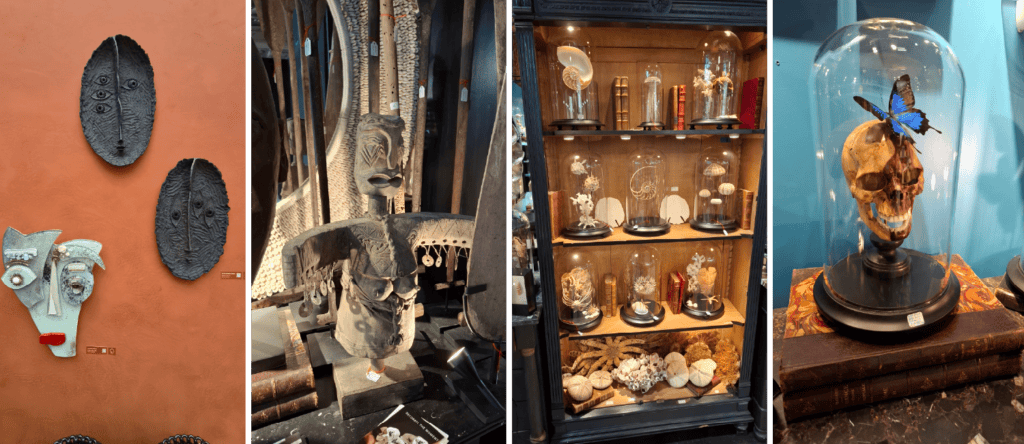
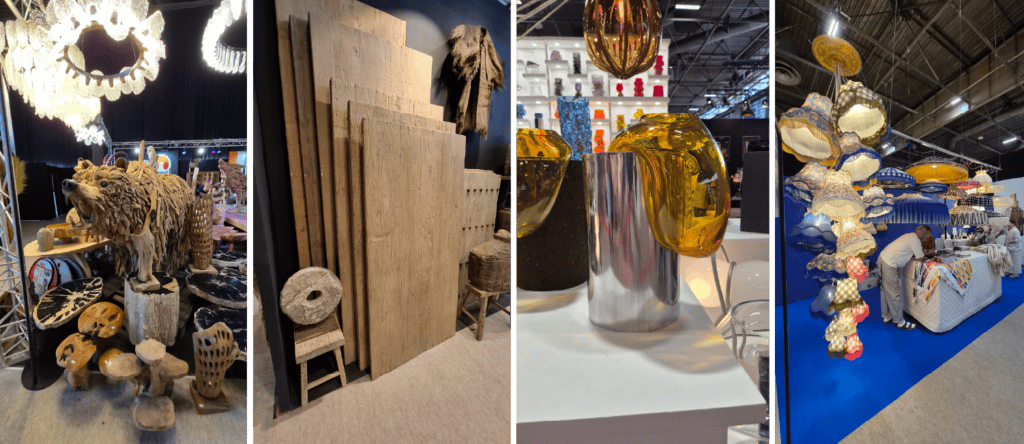
Another theme we kept returning to was what we described as the cabinet of curiosities. Displays combined unusual objects, artwork, animals, masks, sculptures and unexpected forms. Some were beautiful, some strange, but almost all made you stop and look.
That idea of curiosity is particularly interesting for physical retail. Online shopping is very good at getting you efficiently from search to purchase. A physical store can do something different. It can encourage discovery. A display can make someone stop. An object can start a conversation. A feature can encourage a customer to explore an area they hadn’t intended to visit. Those small moments of curiosity can be a valuable part of the customer journey.
5. Tactile & Organic
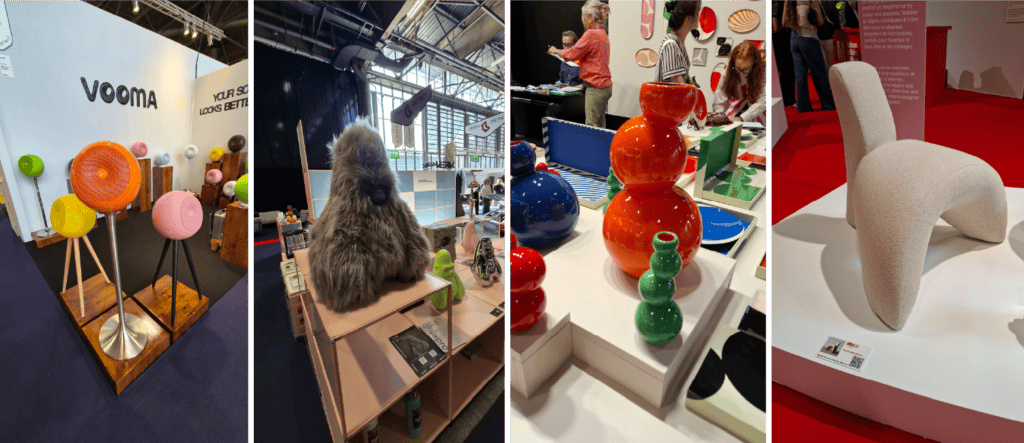
Materials continue to play an enormous role in how spaces feel. We saw organic shapes, rounded furniture, textured surfaces, stainless steel, coloured glass and combinations of soft and hard finishes. In many cases, the contrast between materials was as important as the individual material itself.
This is something physical retail can use to its advantage. Customers can touch a timber surface, feel texture, see light passing through coloured glass or experience how different materials work together. That sensory experience is difficult to replicate through a screen and remains one of the great strengths of a well-designed physical environment.
6. Design With a Sense of Humour
Not everything needs to be serious. One of the most enjoyable themes at the show was humour: furniture that appeared almost human, chairs dressed in clothes, objects with faces, arms or legs and pieces that were deliberately absurd.
It brought personality into the spaces. Retail environments can sometimes become overly functional, particularly when the focus is on layouts, stock densities and operational requirements. Those things are critical, but there should also be room for delight. A little humour, surprise or personality can turn something functional into something memorable.
From Minimalism to Personality
If there was one overall shift we took away from Paris, it was this:
Design is becoming more personal again.
The timber, beige and organic interiors that have dominated design for much of the last decade haven’t disappeared. Instead, they are increasingly becoming the backdrop for something richer; colour, pattern, objects, nostalgia, humour and personal expression. And that is probably the most useful insight for us as retail designers.
Trends should never simply be copied into a project. Our job is to understand what is changing, decide what is relevant and translate those wider influences into something appropriate for the retailer, their brand and, most importantly, their customer.
Trips like Maison&Objet give our team the opportunity to step outside the day-to-day project environment, see what is happening across the wider design world and bring those observations back into the work we do. Sometimes that might influence a colour palette or material. Sometimes it might change how we approach a display. And sometimes it simply sparks a different way of thinking about the experience we are trying to create.
That is the real value of staying curious.

